 La Parguera Bio Bay Tours
The Best Time to See the La Parguera Bioluminescent Bay
The best time to see La Parguera bioluminescent bay comes down to three things: the moon, the hour and the water. Book a night within roughly two days before to five days after the new moon, take the latest departure you can, and pick an evening with calm, clear conditions. Those three choices matter more than the month you travel. La Parguera sits inside the La Parguera Nature Reserve in Lajas on Puerto Rico's southwest coast, and its glow comes from dinoflagellates that flash blue-green the moment the water around them is disturbed. It is also the only bio bay in Puerto Rico where swimming is allowed, which changes how you should plan the whole night. This guide gives you the short answer up front, then walks through the moon calendar, the seasons, the best hour, the weather window and what to do if your dates land on a full moon. You will also see how the main night trips compare on price, duration and group size so you can lock in the right boat fast.
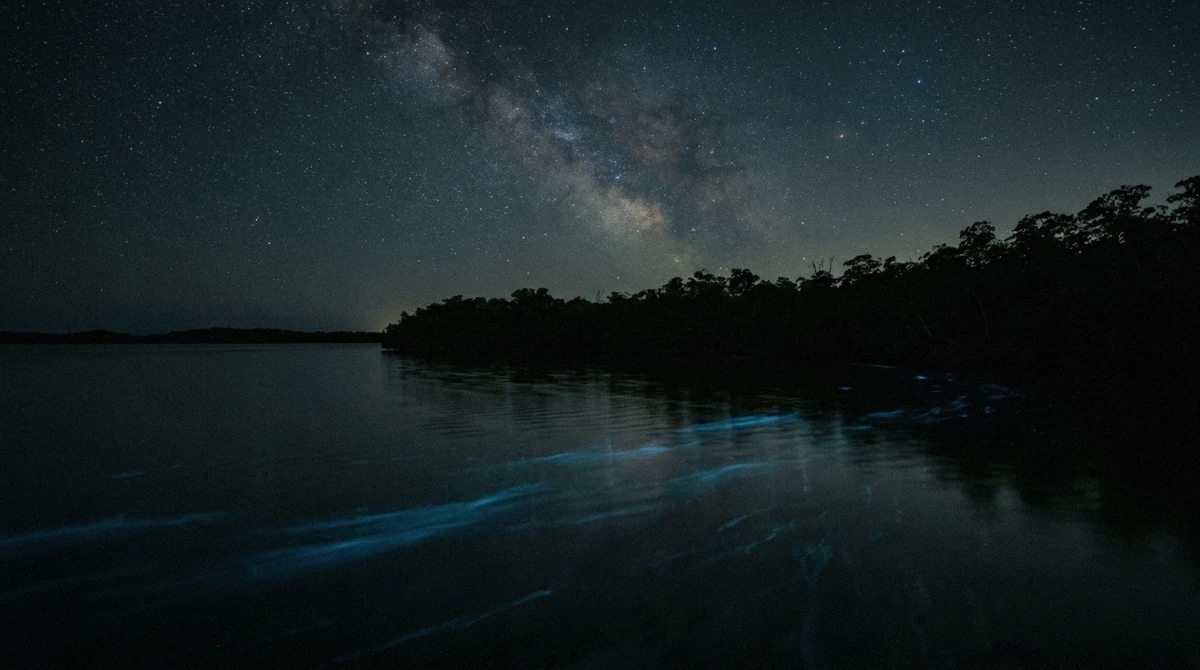
The ceiling condition: a black sky over the bay. Illustrative image.
Quick answer The best time to see the La Parguera bioluminescent bay comes down to the moon calendar: p
Aim for a night within roughly two days before to five days after the new moon, book the darkest, latest slot the operator offers, and wait for a calm, clear evening. La Parguera glows all year, so the moon phase matters more than the month. If your dates land near a full moon, captains reroute to darker coves or cap the trip, and swimming still shows the glow up close.
Key takeaways
- The new moon window, roughly two days before to five days after, gives the darkest skies and the strongest reading of the glow.
- La Parguera is the only bio bay in Puerto Rico where swimming is allowed, so even on brighter nights you can put your hand or body in the water and see the flash.
- Every listing in the comparison offers free cancellation up to 24 hours before departure, so you can book around the moon and rebook if the weather turns.
The Best Time to See the La Parguera Bio Bay: The Short Answer
The three conditions that decide your night
The glow reads strongest around the new moon, when skies are darkest. The reliable window is roughly two days before the new moon through five days after it. Around the full moon, the same bay looks far fainter because sky light washes out the blue-green flash. The second condition is the hour. The darker the sky above the water, the better the display, so later departures win. The third condition is the water itself. The dinoflagellates flash when the water around them is disturbed, so a still, calm evening lets each stroke, wake and splash produce a clean burst of light. Wind and chop spread that energy and dull the effect.
The good news is that you control two of the three conditions with your booking. Pick your date inside the new moon window. Pick a trip that keeps you on the water deep into darkness. Then use free cancellation up to 24 hours before departure, offered on every listing in the full La Parguera bioluminescent bay tours comparison, to move your night if the forecast looks wrong. That combination, dark moon, dark hour and a flexible booking, is the whole strategy in one paragraph.
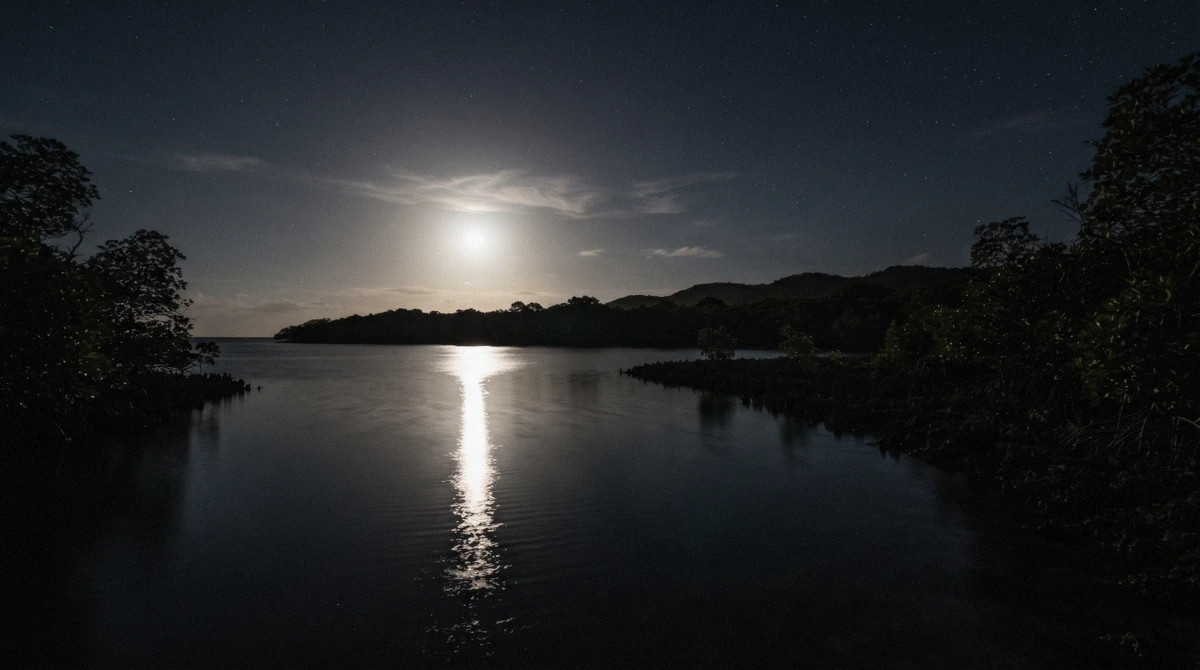
Three nights a month, this is the problem. Photo via Wikimedia Commons, CC BY 2.0.
How the Moon Calendar Controls the Glow
Why the new moon wins
The light in the bay comes from dinoflagellates, microscopic organisms that flash blue-green when the water around them is disturbed. Their output is fixed. What changes through the month is the competition in the sky. Around the new moon the moon is absent, the sky over La Parguera goes properly black, and the flashes in the water read at full strength. Around the full moon the same flashes compete with a bright sky and the whole bay looks dimmer from the boat.
The practical rule from the operators is simple. The glow reads strongest in the window of roughly two days before the new moon to five days after it. On bright nights, captains adapt. Some reroute to darker stretches of the reserve, and some cap or shorten trips when the moon is too high and too bright. That is one reason to book with a licensed operator rather than showing up at the dock. Commercial boats anchor at licensed spots inside the La Parguera Nature Reserve, and captains are US Coast Guard certified, so they know exactly which corners of the bay hold the darkest water on a given night.
If you want to see how La Parguera stacks up against the brightest bay on the island, read the La Parguera vs Mosquito Bay comparison before you lock a date.
Moon phase at a glance
The table below compresses the whole lunar strategy into one view. Use it when you are choosing between two possible weeks for your trip.
| Moon phase | What the sky does | What the glow does | What captains do | Your move |
|---|---|---|---|---|
| New moon | Moon absent, sky fully dark | Strongest reading of the glow | Run the full route | Book first, this is your target |
| Roughly two days before new moon to five days after | Skies stay dark through the window | Glow reads at or near full strength | Standard departures | The ideal booking window |
| Quarter moons | Moderate moonlight | Glow visible but softer | Standard departures | Acceptable fallback, pick the latest slot |
| Full moon | Bright sky all night | Faintest reading of the glow | Reroute to darker spots or cap trips | Rebook inside the new moon window if you can |
Swimming changes the math
One fact about La Parguera makes moon planning more forgiving than elsewhere on the island. This is the only bio bay in Puerto Rico where swimming is allowed. Laguna Grande in Fajardo is kayak-only with no swimming, and Mosquito Bay on Vieques is no-swim.
In La Parguera, swimmers glow. When you drop into the water and move, the dinoflagellates around your body flash blue-green, which reads even on nights when the broad surface glow looks muted from a boat. That is why a brighter moon hurts La Parguera less than it hurts a no-swim bay, and why the swim stops on these trips are worth protecting when you choose which tour to book.
New moon nights give the darkest sky and the brightest glow, and the optimal viewing window is the new moon plus or minus 3 days
There is a two-week period each month when the moon is below the horizon at tour time, and that is when the water sparkles hardest
A full moon washes the glow out, and many operators skip the day before, of and after a full moon, or cope with tarps and later departures
The rainy season runs April through November and heavy rain stirs up sediment that dims the glow, while hurricane season adds cancellation risk from August through November
Tours leave after sunset and the glow keeps building as the night gets later, and in high season the sunset cruise adds a late-night biobay-only departure
Calm clear nights are the goal because wind, rain and choppy waves stir the water and dim the glow, and most companies run rain or shine
The Best Months and Seasons for Bioluminescence in Puerto Rico
Month by month, honestly
A month-by-month ranking of bioluminescence in Puerto Rico is not stated in the source data for this guide, and you should be suspicious of any page that prints one with fake precision. What the operators and the reserve itself make clear is different. The dinoflagellates live in the bay year round, the glow happens on every dark night of the year, and the variable that actually moves your odds is the moon phase, not the calendar month.
The practical planning advice follows from that. First, choose your dates around the lunar window rather than around a season. Two days before the new moon to five days after beats any monthly advantage. Second, treat the dry-sky and calm-water conditions within your chosen week as the real seasonal factor, because chop and haze dull the flash no matter the month. Third, remember what La Parguera offers that the other bays do not. Because swimming is allowed here, the trip works in warm water and cool water alike, since you control how much time you spend in it.
For most travelers, the deciding factor is logistics rather than biology. La Parguera is roughly a two-hour drive from San Juan along the island's south coast toll roads. If you would rather not drive at night, the La Parguera Bio Bay Day Trip from San Juan handles the whole route door to door in about nine hours for $199 per adult.
Season planning without the myths
The table below sorts the planning questions travelers actually ask about timing into what matters and what does not.
| Planning question | Short answer | Why | What to do |
|---|---|---|---|
| Does the month matter more than the moon? | No | The glow happens year round, the moon phase sets the darkness | Pick dates in the new moon window first |
| Is there a low season for the glow? | Not stated | No month-based data exists for flash strength | Ignore month rankings, plan around the lunar calendar |
| What is the real seasonal variable? | Weather within your week | Chop and haze dull the flash | Book refundable, decide 24 hours out |
| Does swimming change the season question? | Yes, in your favor | La Parguera is the only Puerto Rico bio bay where swimming is allowed | Even on softer nights the swim stop delivers |
Pairing a day trip with your night glow
Because the bay sits inside the La Parguera Nature Reserve and the surrounding cays are worth half a day on their own, many travelers turn the night into a full day. Caracoles, the famous shallow sandbar off La Parguera, is waist-deep and calm, with stilt houses along the channel. The La Parguera Cays Water Bike Tour covers that daylight side in two hours for $79 per adult and pairs naturally with a night departure.
Families weighing the evening trip with children should read the guide to a La Parguera bioluminescent bay with kids outing before choosing a boat.
December through March is the dry season and the best stretch of year, with clearer skies, calmer water and nights around 70°F to 80°F
Warm months from July through October often hold peak dinoflagellate counts for the most neon water, with the hurricane season as the caveat
The Best Hour of the Night
Dark beats early
Exact departure times are not stated in the listings, so plan on principle instead. The dinoflagellate flash reads best against a fully dark sky, so the later slot on any given night is the stronger choice. Two trip formats make this easy. The Sunset & Bioluminescent Bay Cruise runs two hours for $65 per adult and uses the first stretch of light to reach the bay, so you are on the water as darkness lands. It is the highest rated format in the comparison at 4.8 from 569 reviews. The Bioluminescent Bay Boat Tour with Swim runs one hour for $75 per adult, is limited to 6 participants, and is the most booked trip at 4.6 from 295 reviews.
The third night format trades the boat for a machine. The Bioluminescent Bay Water Bike Night Tour runs 1.5 hours for $79 per adult in a small guided group, and riders watch their own wake glow with every turn of the wheel. That format turns the hour question into an advantage, because the longer you are out, the darker the sky gets behind you.
Whichever you pick, the decision column is the same. When the operator offers two departures, take the later one. Hour for hour, darkness is the cheapest upgrade you can buy.
Weather Within the Week: Calm, Clear and Still
The in-week forecast matters
Moon phase is the long-range variable. Weather is the short-range one. The flash happens when the water around the dinoflagellates is disturbed, so the cleanest displays come on still evenings when each stroke produces a sharp burst instead of being scattered by chop. Overcast is actually neutral or even helpful, since clouds block moon and starlight without touching the water. What you want to avoid is wind-driven chop and heavy rain on the water surface.
Since month-level weather claims are not stated for this bay, treat the seven-day forecast as your decision tool. Book early, because dark-moon nights sell out. Then hold your judgment until the forecast firms up. Every listing in the comparison offers free cancellation up to 24 hours before departure and reserve-now-pay-later checkout, which turns the weather problem into a scheduling problem. If rain looks likely on your first-choice night, cancel free, move to the next dark night in the same lunar window, and lose nothing.
Pack for the boat, not for the beach. The what to bring bio bay tour checklist covers layers, dark clothing and the small items that make a night on the water comfortable. If you are flying into the island rather than driving, the how to get to La Parguera guide covers the route from San Juan, roughly two hours along the south coast toll roads.
Conditions and what they mean for your booking
Use this table to translate a forecast into a go, wait or move decision.
| Conditions | Effect on the glow | Effect on the trip | Decision |
|---|---|---|---|
| Calm and still | Sharpest flashes, clean swim glow | Comfortable ride | Go |
| Overcast with calm water | Sky even darker, glow reads stronger | No downside | Go, this is a gift |
| Windy with chop | Flash energy scattered across the surface | Wetter, colder ride | Move to another night in the window if possible |
| Heavy rain | Surface disturbed, visibility poor | Operators may adjust | Use free cancellation up to 24 hours before departure and rebook |
| Bright moon and clear | Faintest surface reading | Captains reroute or cap trips | Shift dates into the new moon window or lean on the swim |
Rain policies
Tours are water trips and light rain does not stop the glow, since the dinoflash happens below the surface. Specific rain-cancel rules per listing are not stated beyond the standard terms. What is standard across every listing in the comparison is the free cancellation up to 24 hours before departure, so the leverage stays with you.
Check the 24-hour mark against the forecast and make your call then.
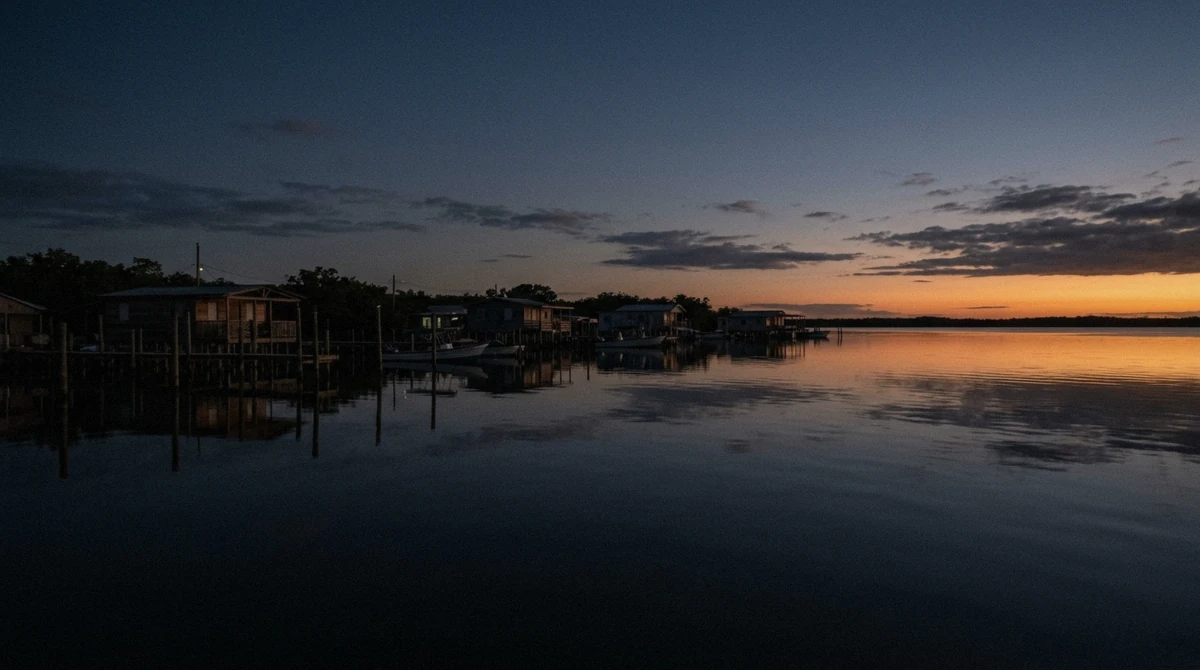
Wind and chop matter almost as much as the moon. Illustrative image.
How to Book Around the New Moon
Step by step
Booking around the new moon is a five step process. One, find the new moon date for your travel month from any calendar. Two, mark the window from roughly two days before it to five days after it. Three, pick the trip format that suits your group. Four, reserve early inside that window, using reserve-now-pay-later checkout so nothing is charged up front. Five, on the day before departure, check the sky and the water and use free cancellation up to 24 hours before if conditions argue for a different night. Every listing in the comparison carries both the free cancellation and the pay-later terms, so this costs you nothing but attention.
A note on dates and privacy. Some travelers prefer to keep the whole boat to themselves around peak dark nights. The private bioluminescent tour option exists for exactly that, and the La Parguera Half-Day Private Boat Tour runs four hours at $520 per group with a 4.8 rating from 24 reviews, which lets you combine the cays by daylight with the bay after dark on your own schedule.
The night trips side by side
The table below compares every night format in the comparison so you can match the boat to your group before the dark nights sell out.
| Trip | Price | Duration | Group | Rating | Best for |
|---|---|---|---|---|---|
| Bioluminescent Bay Boat Tour with Swim | $75 per adult | 1 hour | Limited to 6 participants | 4.6 from 295 reviews | The classic swim night in a small group |
| Sunset & Bioluminescent Bay Cruise | $65 per adult | 2 hours | Shared charter | 4.8 from 569 reviews | Lowest price and longest night on the water |
| Bioluminescent Bay Water Bike Night Tour | $79 per adult | 1.5 hours | Small guided group | 4.8 from 105 reviews | Riders who want their own wake to glow |
| La Parguera Bio Bay Day Trip from San Juan | $199 per adult | 9 hours | Limited to 13 participants | 4.8 from 116 reviews | No-car travelers who want the drive handled |
| La Parguera Cays Water Bike Tour | $79 per adult | 2 hours | Small guided group | 4.9 from 20 reviews | A daylight pairing before a night tour |
| La Parguera Half-Day Private Boat Tour | $520 per group | 4 hours | Private group, per-group rate | 4.8 from 24 reviews | Groups who want the whole boat |
Price check and flexibility
Across the comparison, adult prices run from $65 to $199 per person, with the private charter at $520 per group. The two hour cruise is the cheapest way onto the water, the water bike night adds a machine for $14 more than the swim boat, and the San Juan day trip removes the roughly two-hour drive each way for a premium. Compare the current listings in the La Parguera bioluminescent bay tour price comparison before you commit.
And if you are still weighing whether the trip justifies the price, the honest breakdown is in is the La Parguera bioluminescent bay worth it. Every figure in this section was checked against the live listings.
Book a week or two ahead in normal periods, 2 to 3 months ahead for new moon dates in peak season, and March spring break weeks sell out fastest
If Your Dates Land on a Full Moon
You still have options
A full moon is the worst case, not a lost cause. Around the full moon the glow reads faintest, and captains respond by rerouting to darker spots in the reserve or capping trips on bright nights. Two adjustments recover most of the experience. First, lean on the swim. La Parguera is the only bio bay in Puerto Rico where swimming is allowed, and a swimmer moving through the water triggers flashes at arm's length, which read far better than a wide surface glow under a bright sky. Second, shift your night. The full moon is bright for a few nights, but the window from roughly two days before the new moon to five days after it returns every month, and free cancellation up to 24 hours before departure means moving your booking costs nothing.
If your dates are truly fixed, manage expectations and lean on the format. A longer time on the water, like the two hour cruise, gives the sky time to darken after moonrise and gives you more swim stops. The verdict on whether the trip still delivers on a bright night is argued in detail in is the La Parguera bioluminescent bay worth it.
Full moon survival plan
The table below ranks your moves on a bright night from best to last resort.
| Your move | Why it works | Cost | Verdict |
|---|---|---|---|
| Shift dates into the new moon window | Darkest skies, strongest glow | None, free cancellation up to 24 hours before departure | Best outcome if your schedule allows |
| Book a longer night format | More time on the water as the sky darkens behind moonrise | $65 per adult for the two hour cruise | Strong choice for fixed dates |
| Prioritize the swim stop | Close-range flashes read even on bright nights | Included where swimming is offered | Do it regardless |
| Ask the captain about rerouting | Captains reroute to darker spots on bright nights | Not stated | Available, but not guaranteed |
What other travelers say about bright nights
Reviews on the comparison come from travelers who booked across many moon phases. One traveler wrote, the water lit up around us with every movement, pure magic from the moment we dropped in. Another said, our captain found the darkest water and the swim stop was the highlight of our whole trip.
A third put it plainly, we went on a brighter night expecting little and the swimming still blew us away. The pattern in the five star feedback is consistent. The swim, the captain's local knowledge and realistic expectations carry bright nights, while dark moon nights exceed them.
Can You See the Glow Without a Night Tour?
The short answer is no, and that is fine
Commercial boats anchor at licensed spots inside the La Parguera Nature Reserve, and captains are US Coast Guard certified. Access to the bay's dark anchorages runs through those licensed operators, so a do-it-yourself viewing from shore is not the way this bay works. Booking a night tour is the norm, and the comparison at the La Parguera bioluminescent bay tours comparison shows every option on one page with prices, durations and ratings.
What you can control is the format. Boats get you to the anchor point and offer the swim, which is the signature of this bay. Water bikes put your own wake under you as the glow source. Daytime cays trips like the La Parguera Cays Water Bike Tour and the La Parguera Half-Day Private Boat Tour cover the reserve by light and pair with a night departure for the full picture. For the swim itself, see the Bioluminescent Bay Boat Tour with Swim, limited to 6 participants at $75 per adult.
If you are planning around a family, the practicalities differ. Read La Parguera bioluminescent bay with kids for age fit and boat choice. And if the moon forced a bright night on you, the reassurance is in the swim rule itself. Of the three bio bays in Puerto Rico, Laguna Grande in Fajardo is kayak-only no-swim and Mosquito Bay on Vieques is no-swim. La Parguera is the one where you can get in. That single fact is the best argument for booking here no matter what the moon is doing.
Skip flashlights and phone screens on the water, and leave perfumes, lotions and heavy bug sprays off your skin before you swim
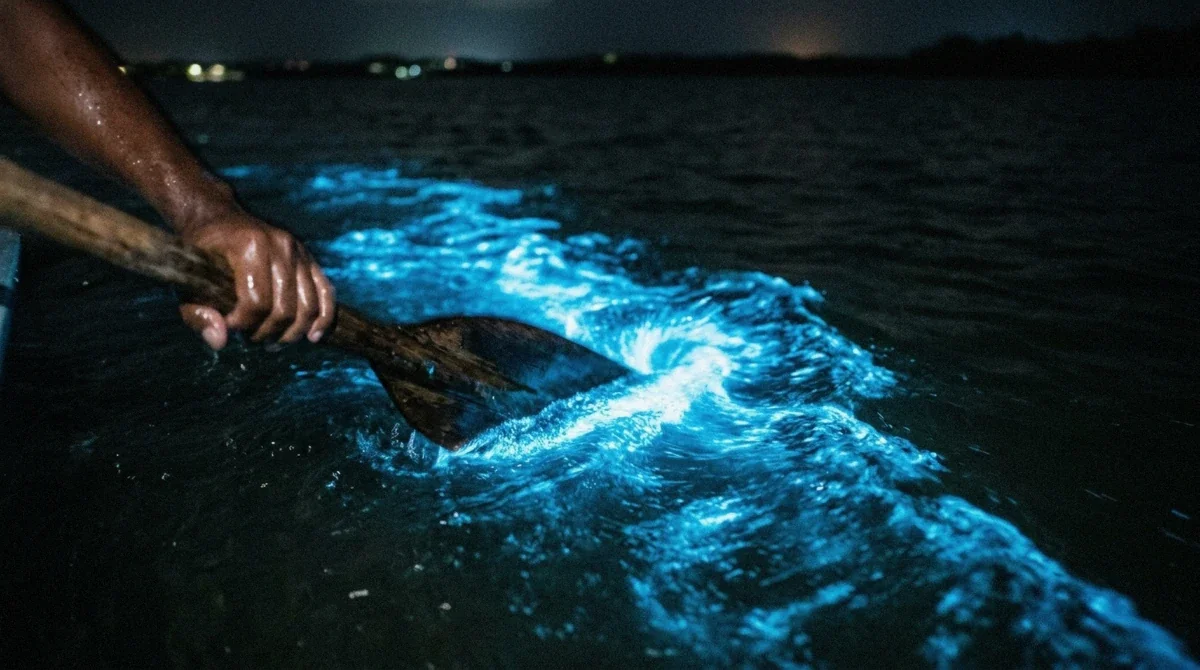
What the darkest nights buy you. Illustrative image.
Questions Readers Ask Next
Is La Parguera worth it if your dates land on a full moon?
It is the weakest night of the month but not a write-off. Around the full moon the glow reads faintest, and captains reroute to darker spots or cap trips on bright nights. La Parguera is also the only bio bay in Puerto Rico where swimming is allowed, so close-range flashes during the swim stop still deliver. If you can, shift to the window from roughly two days before the new moon to five days after it. Free cancellation up to 24 hours before departure makes that move free.
What month is best for bioluminescence?
A best month is not stated in the data, and the glow happens year round. The variable that matters is the moon phase, not the calendar. Book any month, but place your specific night inside the new moon window and choose the darkest, latest departure available.
Do you need a tour, or can you see the glow on your own in La Parguera?
You need a tour. Commercial boats anchor at licensed spots inside the La Parguera Nature Reserve and captains are US Coast Guard certified, so the bay is accessed through licensed operators. Night formats include the one hour swim boat at $75 per adult, the two hour cruise at $65 per adult and the 1.5 hour water bike night at $79 per adult.
What is the best time of year to see bioluminescence in Puerto Rico?
The dinoflagellates glow all year in all three bays, so the honest answer is that timing within the month beats timing within the year. Target the new moon window of roughly two days before to five days after, then use the seven-day forecast to pick the calmest, clearest night inside it. Within Puerto Rico, La Parguera adds the swim factor, since Laguna Grande is kayak-only no-swim and Mosquito Bay is no-swim.
How far from the new moon should I book a bio bay tour?
Book inside the window of roughly two days before the new moon to five days after it. That is when skies are darkest and the glow reads strongest. Reserve early with reserve-now-pay-later checkout, then decide on the specific night using the free cancellation up to 24 hours before departure offered on every listing.
What time of night is the bioluminescence brightest?
Exact departure times are not stated in the listings, but the principle is fixed. The darker the sky, the stronger the flash, so the latest slot on any night is the best one. Longer formats like the two hour Sunset & Bioluminescent Bay Cruise put you on the water as full darkness lands.
Do La Parguera bio bay tours run in the rain?
Specific rain policies beyond the standard terms are not stated. Light rain does not stop the glow, which happens below the surface. The useful rule is flexibility. Every listing offers free cancellation up to 24 hours before departure, so if the forecast turns rough you can move to another night in the same new moon window at no cost.